


ATHLETES’ ENERGY NEEDS

Our diet provides us with energy for our activities and enables us to maintain our body mass and physiological functions. Energy balance is the difference between what is absorbed (food and drinks) and what is expended (vital functions and physical activities). If our calorie intake is higher than what we burn, there is an imbalance that results in weight gain (regardless of the nature of the food consumed in excess—you can gain weight from an apple!). Whether we want to lose or gain weight, we must keep in mind the essential balance between our energy and structural needs.
THE CALCULATION USED TO DETERMINE THE APPROPRIATE INTAKE DEPENDS ON SEVERAL VARIABLE FACTORS
- Basal metabolic rate (BMR) (determined according to weight, sex, height, and age); it corresponds to the energy expended by the body at rest to maintain vital functions (breathing, digestion, sleep
- The physical activity level (PAL)
Adequate food intake (= Daily Energy Expenditure – DEE –) corresponds to the BMR x PAL calculation ; it should be distributed evenly throughout the day, taking training times and durations into account.
HOW TO CALCULATE YOUR BASAL METABOLIC RATE
In France, we usually use the Black & al formulas according to the person's sex:

With P=weight in kg / T=height in m / A=age in years
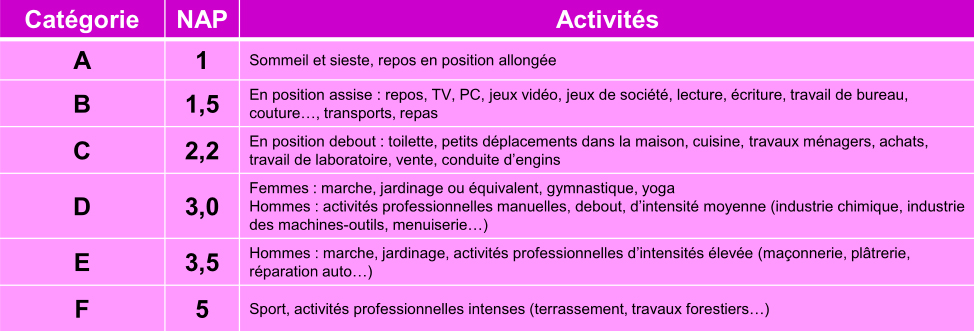
The NAP must then be assessed and calculated. To do this, all of the athlete's daily activities must be listed and timed. Each activity duration is then multiplied by one of the corresponding coefficients established by ANSES*:
EXAMPLE FOR A 35-YEAR-OLD WOMAN WEIGHING 53 KG AND 1.65 M TALL:
Example of Sophie, athletic but with a very sedentary professional activity (Black & al formula for a woman)
-
Basal metabolic rate BMR = 0,963x53^0,48 x 1,65^0,5 x 35^-0,13 = 5,239 MJ that is, 5239 kJ ➔ 1250 kcal
-
Assessment of physical activity level PAL = to be discussed in detail with your dietitian
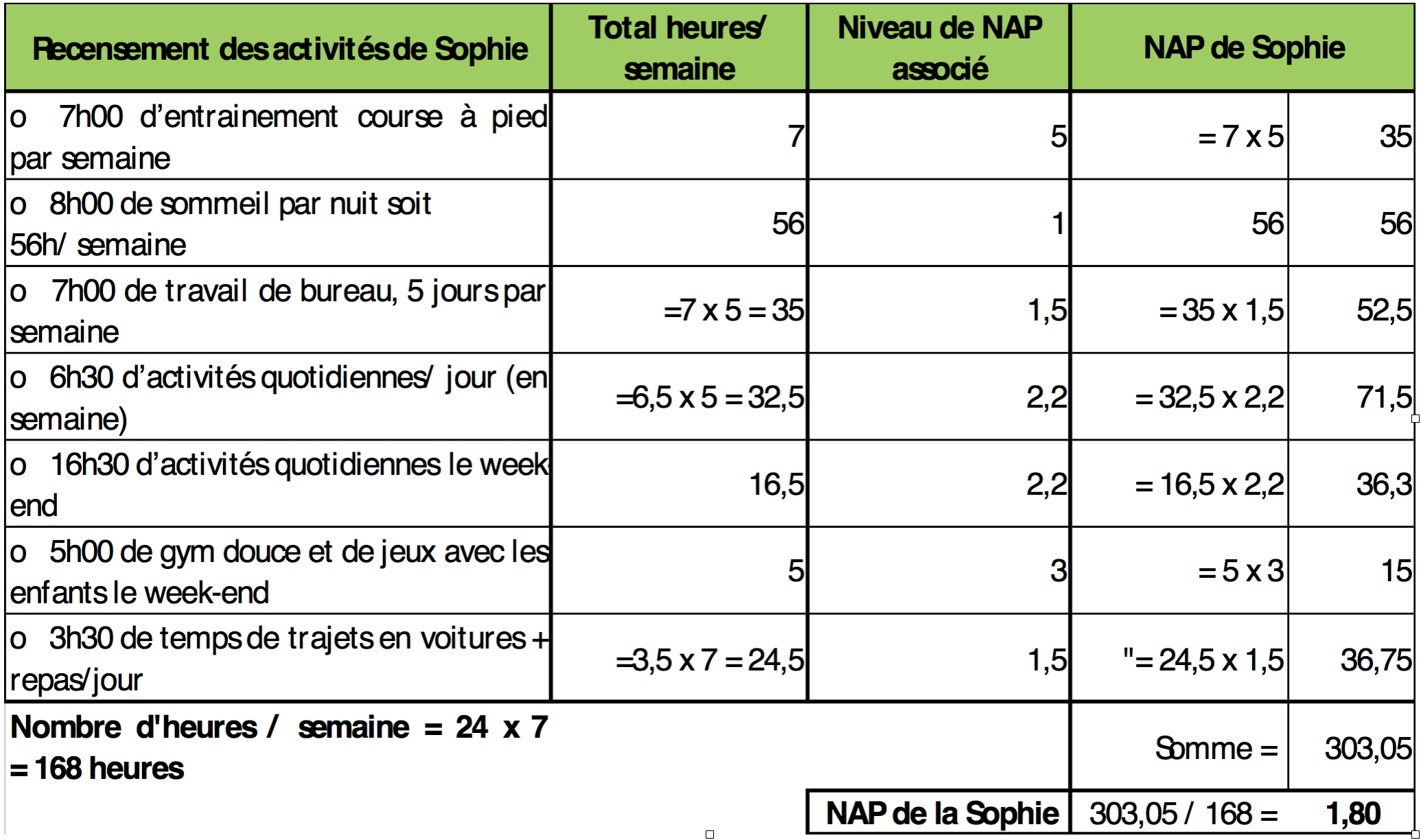
The calculated BMR and the obtained PAL make it possible to calculate the Daily Energy Expenditure (DEE):
DEE = 1250 kcal x 1.8 = 2250 kcal
Thus, the daily intake should be 2250 kcal, with 15% protein, 35% fat, and 50% carbohydrates (primarily complex carbohydrates), for their health, performance, and maintenance of a healthy height-to-weight balance.
EXAMPLE OF CORRESPONDING DAILY MENUS:
Breakfast:
1 yogurt
2 slices of country bread
10 g butter
1 tbsp jam or honey
Lunch:
1 bowl of grated carrots with lemon and cumin
1 tbsp rapeseed oil
1 grilled chicken fillet with herbs
5 tbsp white rice
½ plate of sautéed zucchini
with garlic and 1 tbsp olive oil
30 g of cheese
1 small slice of country bread
1 fresh seasonal fruit
Snack:
15 unsalted almonds
1 fresh seasonal fruit
Dinner:
1 small bowl of quinoa salad (onion, parsley…)
with 1 tbsp chickpeas +
1 soft-boiled egg
1 small slice of country bread
½ plate of oven-roasted butternut squash
with herbs and 1 tbsp olive oil
1 yogurt
Article written for our partner Atlet by:
Caroline JOUCLA • State-certified nutritionist-dietitian • www.carolinejoucladieteticienne.com
ATLET COLLECTION
These articles may also interest you:
-
Sandra Marianacci explains naturopathy!
-
SPORT AND PROTEIN in partnership with ATLET
-
Carbohydrates: How Much Per Day, by Guillaume Klein