


Winter is coming: Keep Training or how to stay fit, even without going outside?
MBut how do you stay fit if you cannot go outside?
No matter why you cannot run outdoors, there are options for improving your fitness.
If you are planning a successful spring racing season, it is essential that you remember the principle of progression:
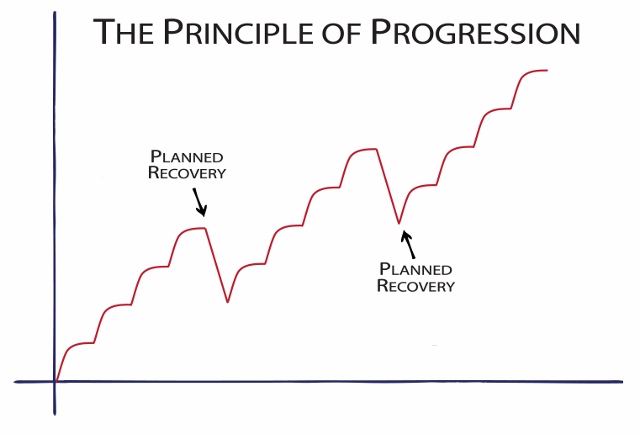
Your preparation for the spring/summer season starts now.
If you do nothing until the nice weather returns, you will not be in shape before summer (and it will be too hot to run fast anyway ;-) NO EXCUSE ;-)
Option 1: run outdoors despite the conditions
It cannot be avoided, even if the rest of the article will give you INDOOR options.
Option 1 involves carrying out your training plan outdoors.
If it is really cold, get the right winter running gear. The gear exists, others do it --- so no excuses! Play it like a champion!
If it snows, run “easy” in the snow. Instead of aiming for distance, run for time; focus on effort, not pace.
If you are sick, you can still run. Your illness will not get worse if it is just a headache, sinus congestion, a cough, or a normal “cold.” But stay home and rest if you have a fever or significant chest congestion. Remember: 30 to 45 minutes of moderate exercise (not a race, a speed workout, or a long run) can boost the immune system! “Neck up, okay to run. Neck down, stay home and rest.”
Option 1 requires a little more mental toughness, planning, and high-quality winter running gear. But generally, it is always possible to run outdoors, regardless of the conditions.
Option 2: Move indoors
Option 2 simply consists of doing your scheduled workout indoors on a treadmill.Almost any workout can be simulated on a treadmill. Pace control is more precise. And you can stop at any time if you wish.
You just need to own a treadmill or have access to a gym. Not everyone does this, which brings us to option 3.
Option 3: Rearrange your plan
If you plan to run long or do a difficult workout, it may be difficult or even impossible in winter conditions.
But if you can still do a short, easy outdoor run,whereas option 3 consists of planning an easy running or rest day and postponing your more difficult run until later in the week, when conditions improve.
Let's take an example. If this is your normal schedule but it snows heavily on Tuesday:

You can change your schedule to this:

Simply follow these rules:
- Keep at least one, but preferably two, days between your speed workout and your long run. Spreading your efforts throughout the week is essential.
- Run easy (with strides) before a difficult workout rather than doing nothing. You will feel better during the difficult workout because the easy run has “primed” your body for the more challenging effort.
- Always prioritize the most important runs of the week: the "long run" for distance runners and the "fast" for 5K/10K runners. Skipping shorter runs is much more acceptable.
Being flexible with your plan will help you get through the winter months, when nature often conspires against you.
Remember: a training plan is just a roadmap. You can take a few detours ;-)
Option 4: Change sports ...temporarily ;-)
Most runners hate cross-training... lRunners want to run. But sometimes, you simply can't.
Skipping a run—especially a long run or a workout—is not ideal. But the best thing to do is to simulate the same run while training.
Here is a simple way to estimate “mileage” with cross-training: 10 minutes = 1.5 km. This includes a 3-minute buffer since most of our mileage is based on an average pace of 4:40 / 1000.
Here are some ways to simulate different workouts indoors:
- Instead of an 8 km run with 6x400 m, you can cycle for 60 minutes with 6x2-minute hard intervals.
- Instead of a 20 km long run (which usually takes you two hours), try two and a half hours of swimming (BE CAREFUL not to drown...from boredom ;-) )
- Instead of a 12 km run with 5 km at a fast pace, you can cycle for 90 minutes with 30 minutes at a “reasonably hard” pace in the middle
These workouts can be very similar to what you had originally planned to do. They will maintain your fitness.
Simply choose running-specific forms of “cross-training”: cycling, swimming, the elliptical,.... But since it's winter, cross-country skiing is another excellent option.
And don't forget resistance exercises!!!
Option 5: Binge on Netflix...or not ;-)
You can't run outdoors, you don't have access to a treadmill or cross-training, and rearranging your schedule is impossible.
It's time to cancel your race registration and subscribe to Netflix :-) Skipping a race isn't the best idea, but take a look at the Principle of Progression chart above.
Does it include periods of “planned recovery”? You can take an unplanned break during the winter and continue to make progress—just make sure to get back to work when the weather improves!
There are still other ways to work on your fitness at home. Almost all strength-training exercises specifically for runners can be done anywhere
Here is an example workout that every runner should do regularly:
With minimal equipment, you can become stronger, reduce the risk of injury, and make your return to running much smoother.
Focus on your weaknesses
We know that our training will be disrupted by winter.
Whatever your weaknesses, you can use this time to improve.
If you are prone to injuries, do more resistance training.
If you are a beginner or do not run more than 30 to 50 km per week, focus more on cross-training to help you build endurance without risking running-related injuries.

If you still cannot train for some reason, then why not invest in your running education?
Read a good book about running or sports nutrition
Sign up for a spring camp.
Read and reread our blog .
Rather than doing nothing, do something that helps you run.
The possibilities are almost endless, so choose what interests you and get to work!
And finally, to motivate you and help you wait for spring, watch and watch again ...