


Nutritional intake for optimal recovery
Recovery is the time for repair; nutrition during this phase should not be neglected, just as it should not be neglected during the preparation or exercise phases. The aim of nutrition during the recovery phase is to rehydrate, eliminate waste products, and replenish the deficits in minerals, trace elements, and vitamins caused by sweating and metabolism.
This article first explains, in general terms, physical exercise and its effects on the body. It then presents the needs for minerals, vitamins, and macronutrients after exercise, the order in which they should be consumed, and certain beneficial foods; finally, it provides a brief overview of hydration during the recovery phase.
Thus, to summarize, recovery begins as soon as exercise ends. The first 4 to 6 hours are the most important. During these post-exercise hours, the muscle has a high demand for glucose and amino acids, caused by glycogen depletion and muscle breakdown.
Immediate recovery snack:
During the first 2 hours, priority should be given to waste elimination and rehydration. Food intake (a meal) is not recommended during the following hour (one must wait for blood flow to return to the digestive tract) in order to avoid intestinal problems. However, it is important to consume approximately ½ litre of a beverage rich in carbonate ions to restore acid–base homeostasis (See ATLET organic energy drink). Then, eating a banana and dried fruit is recommended; these foods are alkalizing.
Delayed recovery meal: within the following 2 to 4 hours:
- Protein sources of good nutritional value should be preferred (eggs and/or fish, with meat reserved for the following day); this supports tissue regeneration.
- Consuming a dairy product enables protein resynthesis and, above all, provides tryptophan, a neurotransmitter associated with rest.
Eat potatoes for their alkalizing effect rather than rice or pasta. This will facilitate the return to acid–base homeostasis. - To remineralize the body, also favor raw or cooked vegetables and fruit.
- Do not forget to enhance your dishes with one or two teaspoons of brewer’s yeast and/or wheat germ. This provides zinc, copper, and selenium, which are cofactors for antioxidant enzymes.
- Having dessert is an excellent idea, as the sugar consumed at that time helps replenish glycogen stores in the muscles and liver.
- Favor variety and diversity in the foods included in this meal (15 to 60 different foods); this greatly facilitates recovery by providing a broader range of vitamins, minerals, and trace elements.
- Despite the joy of finishing and achieving your performance, limit consumption to a maximum of two glasses of wine. Alcohol promotes urinary losses and tissue acidity.
DISCOVER OUR RECOVERY COLLECTION

PHYSICAL EXERCISE:
The WHO defines physical exercise as “any movement produced by skeletal muscles that results in increased energy expenditure.”
Oxygen requirements increase as a result of muscular work; the same applies to cardiac output and ventilation. Indeed, two exercise mechanisms meet the muscles’ increased oxygen requirements:
- Increased blood flow to the muscles (through increased cardiac output and selective distribution—from less active areas to more active areas);
- Increased extraction of oxygen from the blood by the muscle.
Depending on the type of exercise, the body will use different energy-production systems (ATP). They will contribute in different proportions, with one or the other predominating. One of the aims of sports training is to develop the ability to transport and use these different energy sources.
The aerobic energy system is the one primarily used during endurance exercise. Within a few seconds, breathing and heart rate accelerate to deliver more O2 (oxygen) to the exercising muscles. This oxygen is used to oxidize glucose from the muscle, blood, or liver into carbon dioxide (CO2). This releases water and a maximum amount of energy (38 ATP).
INSERT CARBOHYDRATE METABOLIC PATHWAY FORMULA
However, there are factors that limit this oxygen supply:
Pulmonary factors: with the maximum amount of O2 the lungs can contain, as well as the rate at which oxygen binds to hemoglobin.
Circulatory factors: with improvements in local blood flow and variations in blood flow.
Tissue factors: with the maximum capacity of the muscle cell to use oxygen.
PHYSICAL EXERCISE AND ITS EFFECTS ON THE BODY:
The respiratory system:
As the intensity of physical exertion increases, O2 consumption also increases with the work rate. This is measured in terms of the volume of air consumed over a defined period: VO2.
The more intense the exercise, the higher the VO2. However, VO2 can increase only up to a maximum value (VO2 max), which depends on the individual's age, sex, training, and the sport practiced. VO2 max actually indicates an individual's capacity to perform endurance exercise. When this limit is exceeded, the body uses other resources that do not rely on oxygen (anaerobic pathways, lactic or alactic).
During exercise, gas exchange changes. The muscles require more O2 and therefore release a greater quantity of CO2. Respiratory rate (FR = number of respiratory cycles per minute) increases, as does tidal volume (VC = volume of air drawn in with each inhalation). Thus, respiratory flow, which is the product of FR and VC, also increases.
When exercise stops, O2 consumption decreases and gradually returns to its initial value after a period known as recovery.
The cardiovascular system:
The heart rate increases even before activity begins, due to nerve stimulation and the production of certain hormones such as adrenaline. During exercise, the increase in heart rate increases blood flow to the muscles. This provides an increased supply of O2 and nutrients. It increases the power of each cardiac contraction (blood flow can be multiplied by 6).
The long-term adaptation of the heart concerns only high-level athletes, who develop the cardiac muscle through regular training. The same applies to other muscles, which become richer in capillaries through regular exercise and therefore benefit from improved blood flow.
At the end of exercise, the heart rate decreases in two stages: first rapidly, then more slowly until it returns to its resting value.
Vascular adaptation:
Like the heart, blood vessels adapt and contribute to improved athletic performance. At the beginning of physical exertion, the need for nutrients and O2 increases. Thus, the arterioles and capillaries dilate, while at the same time the vessels supplying resting organs constrict, leading to a reduction in blood flow to the “non-priority areas.” The skin, in turn, adapts by regulating body temperature through sweating and therefore through the dilation of its arterioles.
The blood also adapts to exertion; hemoglobin doubles its capacity to release the oxygen it carries (from 1/3 to 2/3).
Thus, thanks to all these adaptations, the volume of oxygen available to the muscles during exertion is multiplied by 60 compared with the volume at rest.
Energy expenditure:
Each cell in the body consumes a certain amount of nutrients (products of digestion) for cellular respiration. These nutrients are carried by the blood. Energy expenditure varies according to basal metabolism, thermoregulation, the thermic effect of food, and physical activity.
During physical exertion, it is primarily the cells’ consumption of glucose that increases. Cellular respiration enables the production of energy (ATP) through an oxidation reaction involving glucose molecules.
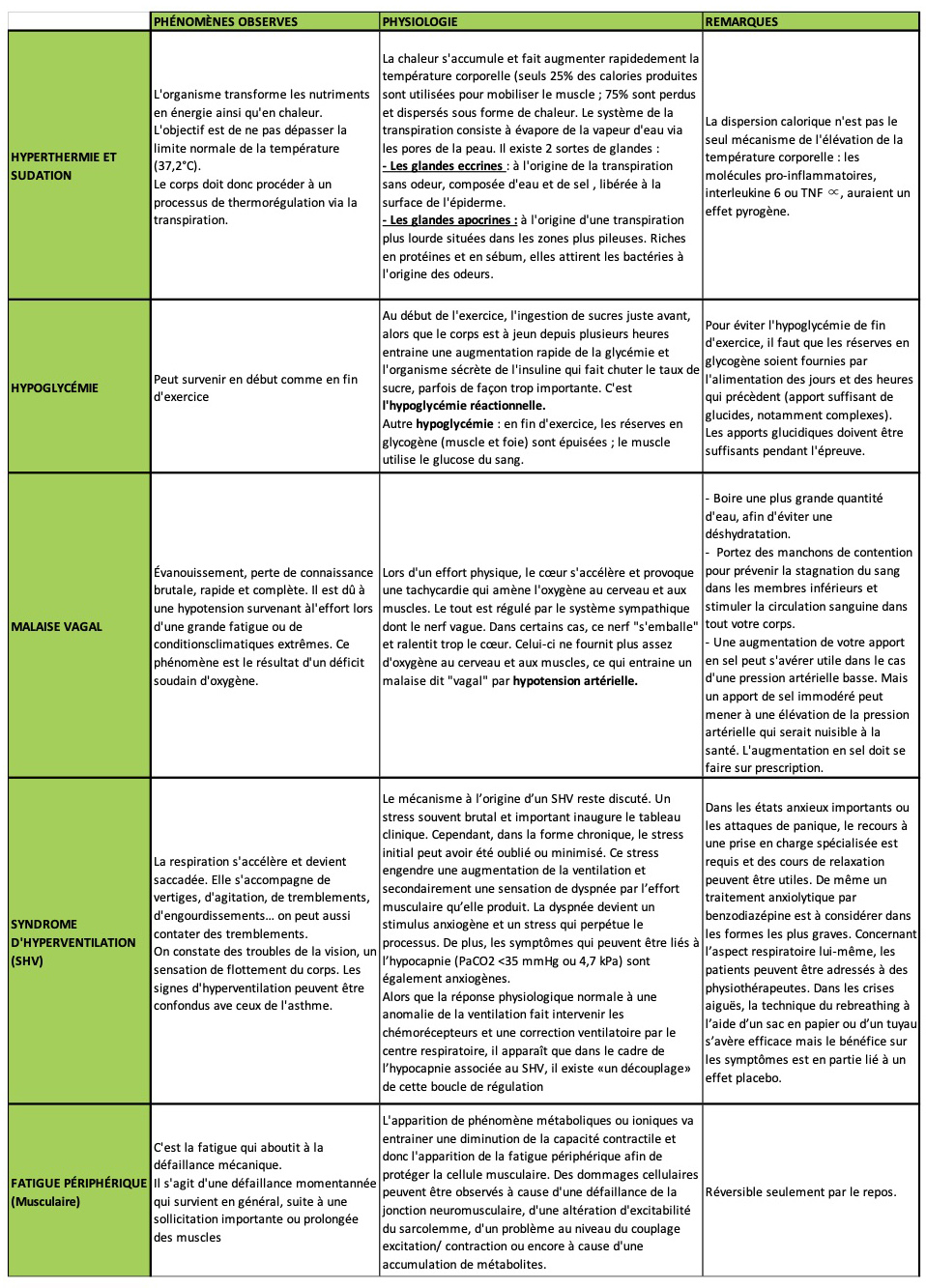
In response to exertion, the body may undergo several reactions with effects that are more or less visible and more or less delayed.
DISCOVER OUR RECOVERY COLLECTION
NUTRITION DURING THE RECOVERY PHASE:
Recovery is the sum of all the actions undertaken to allow the body to fully regenerate after undergoing physical and mental stress. It is the time required after a performance for the body to return to a state compatible with repeating an equally demanding performance.
The more intense and/or prolonged the effort, the more time and care will be needed for recovery; the more trained the individual, the faster they will recover. Recovery also helps limit muscle soreness; it is essential for preventing fatigue, exhaustion, overtraining, and injuries.
Matching dietary intake to energy expenditure is a key factor in nutritional recovery. The recovery phase must compensate for the losses resulting from the physical effort made during training or competition by adapting the diet to the periods before, during, and after exercise.
Here is a summary of the essentials, but for more details, please see the previous articles about vitamins and minerals. 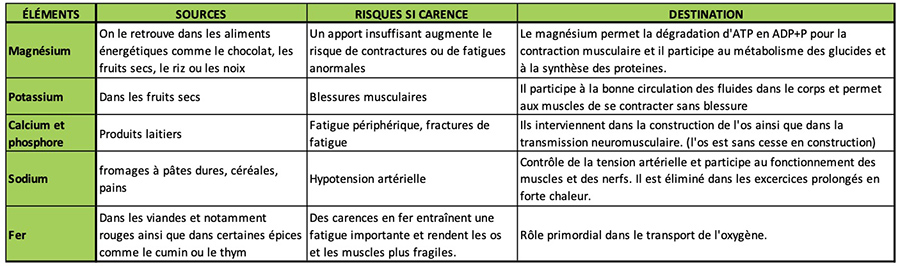
An unbalanced diet leads to vitamin deficiencies that can increase the risk of injury, especially deficiencies in vitamins B and C, which help provide energy, combat stress, and fight fatigue. Nutrition is essential because, apart from vitamins D and K, the human body is unable to synthesize vitamins.
The ESSENTIAL vitamins for athletes are: 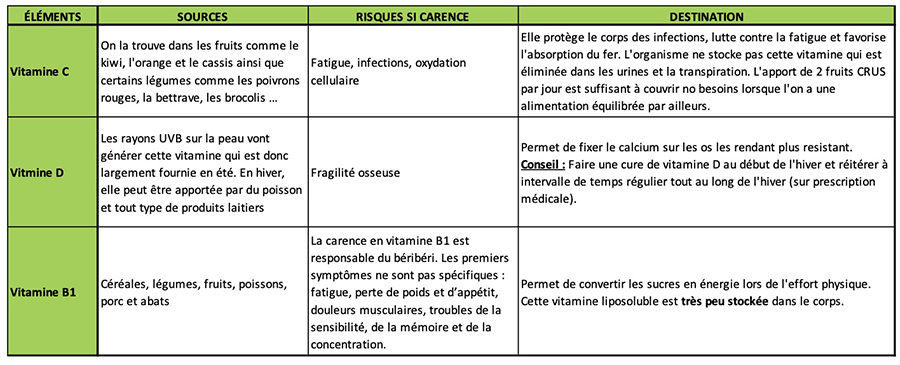
All foods are good and should be consumed in variety, according to the seasons and in reasonable quantities. They all provide specific benefits through their nutritional richness. None should be excluded, but some should nevertheless be prioritized by athletes.
- Orange: Its high vitamin C content promotes energy storage as glycogen. Among its minerals, calcium predominates. Eating one orange daily meets athletes’ vitamin C requirements.
- Banana: a fruit very rich in potassium and magnesium, which helps limit the occurrence of cramps, muscle soreness, and fatigue in athletes. Magnesium plays a role in adapting to stress. It is one of the most energy-rich fruits and therefore helps restore energy stores (carbohydrates) during a recovery snack. Bananas are a source of vitamins B and E, which help strengthen antioxidant capacity during exercise recovery.
- Kiwi: Very rich in vitamin C, it is the fruit of choice for breakfast. As part of a post-exercise meal, kiwi supports antioxidant defenses and recovery. Like an orange, one kiwi a day provides the daily vitamin C requirement. Vitamin E, normally found in fatty foods, is surprisingly also found in kiwi. It is therefore an antioxidant food. Among its minerals, potassium predominates. An added benefit of kiwi: it contains an enzyme, actinidin, which facilitates the digestion and absorption of animal proteins.
- Grapes: thanks to their high water and potassium content, they have a diuretic effect that promotes the elimination of waste products, provided adequate hydration is maintained. They are recommended as part of a recovery meal because of their richness in easily assimilated sugars, their antioxidant and alkalizing properties.
Regarding macronutrients (carbohydrates, proteins, fats), they come from our diet and provide energy to our bodies to support vital functions.
Carbohydrates:
They are the most important sources of energy in our diet. CHO intake and its precise “timing” during a recovery phase greatly influence the quality of glycogen resynthesis. These strategies are highly important in demanding situations such as triathlons or marathons, as well as during repeated competitive events, such as swimming and middle-distance races, throughout the day. The earlier carbohydrates are consumed after exercise stops, the greater the amount of muscle glycogen resynthesized. Thus, when CHO is consumed immediately after exercise stops, the amount of muscle glycogen measured in the muscle 6 hours later is greater than when CHO intake is delayed until 2 hours after the end of exercise.
Furthermore, carbohydrates have been shown to be the first choice for post-exercise recovery meals. Thanks to their high Glycemic Index (GI), they provide rapid energy for synthesis during recovery (Louise M. Burke, Bente Kiens And John L. Ivy, Carbohydrates and fat for training and recovery, Journal of Sports Sciences, 2004, 22, 15–30). The first studies examining the amounts of carbohydrates consumed during the recovery phase date back more than thirty years. The authors reported that consuming 150 to 600 g of CHO per day led to greater replenishment of glycogen stores over a 24-hour period. A few years later, it was shown that consuming 1.5 g of CHO per kilogram of body weight over a 2-hour period following exhaustive exercise resulted in an adequate glycogen resynthesis rate, which was not improved when the amount of CHO was doubled (i.e., 110 g of CHO per hour for a 75 kg subject)(J. L. Ivy et Al., Muscle glycogen synthesis after exercise: Effect of time of carbohydrate ingestion, Journal of Applied Physiology · May 1988).
For immediate recovery after exercise (from 0 to 4:00), it is recommended to consume approximately 1 g/ Kg/ h of carbohydrates (carbohydrates or CHO) at frequent intervals (Roy Jentjens and Asker E. Jeukendrup, Determinants of Post-Exercise Glycogen Synthesis During Short-Term Recovery, Sports Med 2003; 33 (2): 117-144).
Proteins:
During physical exercise, the muscle undergoes significant changes in the metabolism of structural proteins, which must be corrected from the early recovery phase onward. Prolonged physical exercise can indeed induce microdamage to the muscles, requiring repair processes during the recovery phase, which involve increasing protein synthesis rates.
Numerous studies, such as John L. Ivy et al. Early postexercise muscle glycogen recovery is enhanced with a carbohydrate-protein supplement, J Appl Physiol 93: 1337–1344, 2002, have examined the role of proteins during the recovery phase, and the overall findings highlight the importance of early protein replenishment (as soon as exercise ends!). However, the results do not support the intake of insulinogenic amino acids to stimulate muscle glycogen storage after exercise.
It may be preferable to consume modest amounts of branched-chain amino acids (primarily leucine – 0.1 g/ Kg/ h –) combined with carbohydrates (0.3 g/ Kg/ h) and other proteins (0.2 g/ Kg/ h), which will stimulate protein synthesis more effectively after exercise and therefore promote recovery.
The composition of the diet plays an important role in controlling the release of growth hormone. This stimulation, observed one hour after the ingestion of dietary proteins, promotes the anabolism (synthesis) of contractile proteins and the structure of skeletal muscles. However, protein synthesis reaches a plateau; amino acids from dietary proteins consumed in excess are oxidized and not stored (that is, beyond 1.5 g/kg/h).
Lipids:
Post-exercise replacement of fat is not necessary for an athlete with a balanced diet. Provided that the exercise is of moderate intensity (± 40% of V̇O2max) and lasts more than one hour, most authors estimate that the use of triglyceride stores is around 20–50% of the reserves in the active muscles (See Biochemistry of Physical and Sports Activities, Jacques R. Poortmans and Nathalie Boisseau, Éditions de Boeck, 2009). Free fatty acids are used approximately equally by active muscles and adipocytes. Therefore, the human body has sufficient available lipid reserves, and the depletion of muscle triglycerides remains limited compared with that of phosphocreatine (PC) and glycogen.
Recovery begins as soon as the effort ends. The first 4 to 6 hours are the most important. During these post-exercise hours, the muscles have a high demand for glucose and amino acids, caused by glycogen depletion and muscle breakdown
Immediate recovery snack:
During the first 2 hours, priority should be given to waste elimination and rehydration. Food intake (a meal) is not recommended during the following hour (one must wait for blood flow to return to the digestive tract) in order to avoid intestinal problems. However, it is important to consume approximately ½ litre of a beverage rich in carbonate ions to restore acid–base homeostasis (See ATLET organic energy drink). Then, eating a banana and dried fruit is recommended; these foods are alkalizing.
Delayed recovery meal: within the following 2 to 4 hours:
- Protein sources of good nutritional value should be preferred (eggs and/or fish, with meat reserved for the following day); this supports tissue regeneration.
- Consuming a dairy product enables protein resynthesis and, above all, provides tryptophan, a neurotransmitter associated with rest.
- Eat potatoes for their alkalizing effect rather than rice or pasta. This will facilitate the return to acid–base homeostasis.
- To remineralize the body, also favor raw or cooked vegetables and fruit.
- Do not forget to enhance your dishes with one or two teaspoons of brewer’s yeast and/or wheat germ. This provides zinc, copper, and selenium, which are cofactors for antioxidant enzymes.
- Having dessert is an excellent idea, as the sugar consumed at that time helps replenish glycogen stores in the muscles and liver.
- Favor variety and diversity in the foods included in this meal (15 to 60 different foods); this greatly facilitates recovery by providing a broader range of vitamins, minerals, and trace elements.
- Despite the joy of finishing and achieving your performance, limit consumption to a maximum of two glasses of wine. Alcohol promotes urinary losses and tissue acidity.
The goal of nutrition during the recovery phase is to rehydrate, eliminate waste products, and compensate for mineral, trace element, and vitamin deficiencies caused by sweating and metabolism. In the following days, it is essential to rebalance the intestinal flora (through fermented foods: yogurt, sauerkraut, pickles, etc.) to combat oxidative stress and free-radical damage, neutralize tissue acidity, and repair muscle tissue.
Post-exercise hydration:
The choice and quantity of drinks are important at every stage of an athlete’s life. After exercise, the goal is to speed up recovery and compensate for fluid, carbohydrate, and micronutrient losses. Hydration should therefore not consist simply of plain water. Electrolyte losses through sweating must also be replaced alongside fluid losses.
- The recovery drink should contain sodium and potassium, such as Arvie, Rozanna, or Vichy St Yorre water.
- The volume consumed should be approximately 150% of the volume lost through sweating (you should therefore drink an amount of water equivalent to 1.5 times the weight lost during exercise).
- Consuming a carbohydrate solution helps restore exercise capacity more effectively; water is the vehicle for this intake.
Article by Caroline JOUCLA • State-certified nutritionist-dietitian • www.carolinejoucladieteticienne.com
Source: Article published on our partner ATLET’s website
