


Quinoa, a performance booster for athletes?
Quinoa is popular among athletes, and for good reason. Nutritionists unanimously praise the seeds of this pseudocereal for their varied nutritional benefits. They help balance and diversify the diet by providing numerous nutrients. Why is this 5,000-year-old seed also so prized for its nutritional value?
A nutrient-rich food
Quinoa was discovered in South America; it was one of the staples of the Incas’ diet. Quinoa can be eaten as a supplement to or alternative to wheat and other cereals. It contains many essential amino acids that only our diet can provide, since our bodies cannot produce them. It also contains a large amount of protein. In addition, quinoa is rich in dietary fiber, which facilitates digestion and improves blood sugar regulation, allowing glucose to be delivered quickly to the muscles during exercise.
Quinoa is highly nutritious; it provides many trace elements, which are pure mineral elements necessary for the proper functioning of the body and therefore for maximizing performance during exercise:
- Manganese: this is a trace element whose deficiency causes numerous problems, such as bone deformities. It is involved in many different metabolic processes and acts as a cofactor for certain enzymes.
- Iron: iron plays a central role in oxygen circulation and the formation of red blood cells. Its role in transporting oxygen through the bloodstream makes iron an essential nutrient for any athlete seeking performance and endurance.
- Copper: Like iron, copper is an essential trace element for the proper functioning of the body. Copper travels through the blood and is involved, among other things, in hemoglobin formation and the immune system. It facilitates iron absorption; by providing both, quinoa therefore helps prevent deficiencies.
- Phosphorus: phosphorus is also involved in various metabolic processes: bone formation, the digestive system, protein synthesis, energy extraction and transport, cellular repair… A phosphorus deficiency leads to weak bones and joint pain; you should therefore ensure a regular phosphorus intake in order to improve your results.
- Magnesium: The body does not produce magnesium; it must obtain it from our diet. Like the other minerals found in quinoa, it is involved in various biological processes: muscle contraction, heart rate, immune defense and growth. Note also that cocoa is an excellent source of magnesium (150 to 400 mg per 100 g, or approximately 200 mg in a 100 g bar of dark chocolate containing 80% cocoa), which is good to know for those who, like me or the Incas, are passionate about cocoa!
- Zinc: Zinc is also involved in many processes: vision (especially in darkness), bone metabolism, digestion, tissue growth and healing… It also contributes to insulin synthesis and regulation. A zinc deficiency causes a serious loss of performance and muscle fatigue.
- Vitamin B2 (Riboflavin): Vitamin B2 plays a fundamental role in converting food into energy and contributes to muscle repair metabolism.
Cooking quinoa
With this overview of the nutrients provided by quinoa, you now understand why quinoa is set to become your new best friend, both to optimize your performance during intense exercise and to avoid flagging during endurance events.
You are now experts on the nutritional benefits of quinoa, but one important question remains: “When and how should such a food be consumed as part of training or a competition?”
The bravest can try the seeds raw, but for everyone else, don’t panic! Quinoa is easy and quick to cook: it cooks in fifteen minutes, and its flavor is mild enough to be combined with almost anything. To give you some ideas, here is a recipe in which quinoa is served with sautéed vegetables. Together, they make a complete and varied meal to eat the day before your endurance event. Quinoa’s high fiber and carbohydrate content will help you keep going over the long haul, while the vitamins and other nutrients provided by the vegetables will help you perform at your best. This recipe is sufficient on its own, but it is also excellent served with meat or fish.
Recipe: Quinoa with vegetables
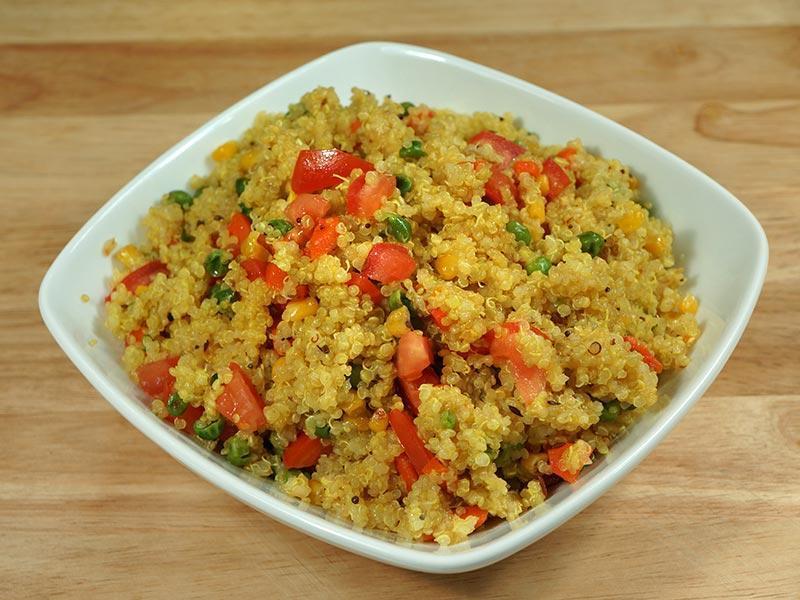
1. Cook 150 g of quinoa in 450 mL of water. (Approximately 15 minutes of cooking) 2. Meanwhile, cut and prepare the vegetables: 2 carrots, 1 zucchini and ½–1 bell pepper. 3. Chop the onion and sauté it in oil, then add the other vegetables, stirring frequently (approximately 10 minutes of cooking). 4. Mix the quinoa with the vegetable mixture and cook everything for approximately 5 minutes, stirring. 5. Season to taste; here is my preference: salt, pepper, parsley and cumin. Ingredients: 150 g quinoa, 2 carrots, 1 zucchini, ½ bell pepper, 1 onion, oil
Quinoa also provides many nutrients found in meat; it is therefore an excellent choice for those who want to avoid meat without developing deficiencies. It is also rich in plant-based protein and amino acids, helping to balance all types of diets. It is interesting to compare the nutritional values of quinoa and chicken to illustrate this:

The table above clearly illustrates the nutritional comparison between quinoa and chicken: chicken contains more concentrated protein but offers a less varied range of nutrients. Finally, although quinoa is a cereal, it contains no gluten, making it an excellent choice for people following a gluten-free diet due to intolerance or for those seeking to limit their gluten intake.
It is therefore easier to understand why quinoa receives so much attention: it is a tasty pseudocereal, easy to cook and, above all, a major source of numerous nutrients essential for the proper functioning of the body. Its consumption also provides slow-release carbohydrates and a significant amount of protein, while being highly digestible and low in calories… what more could you ask for?!
Performers, get your seeds ready!
Discover some of our QUINOA products